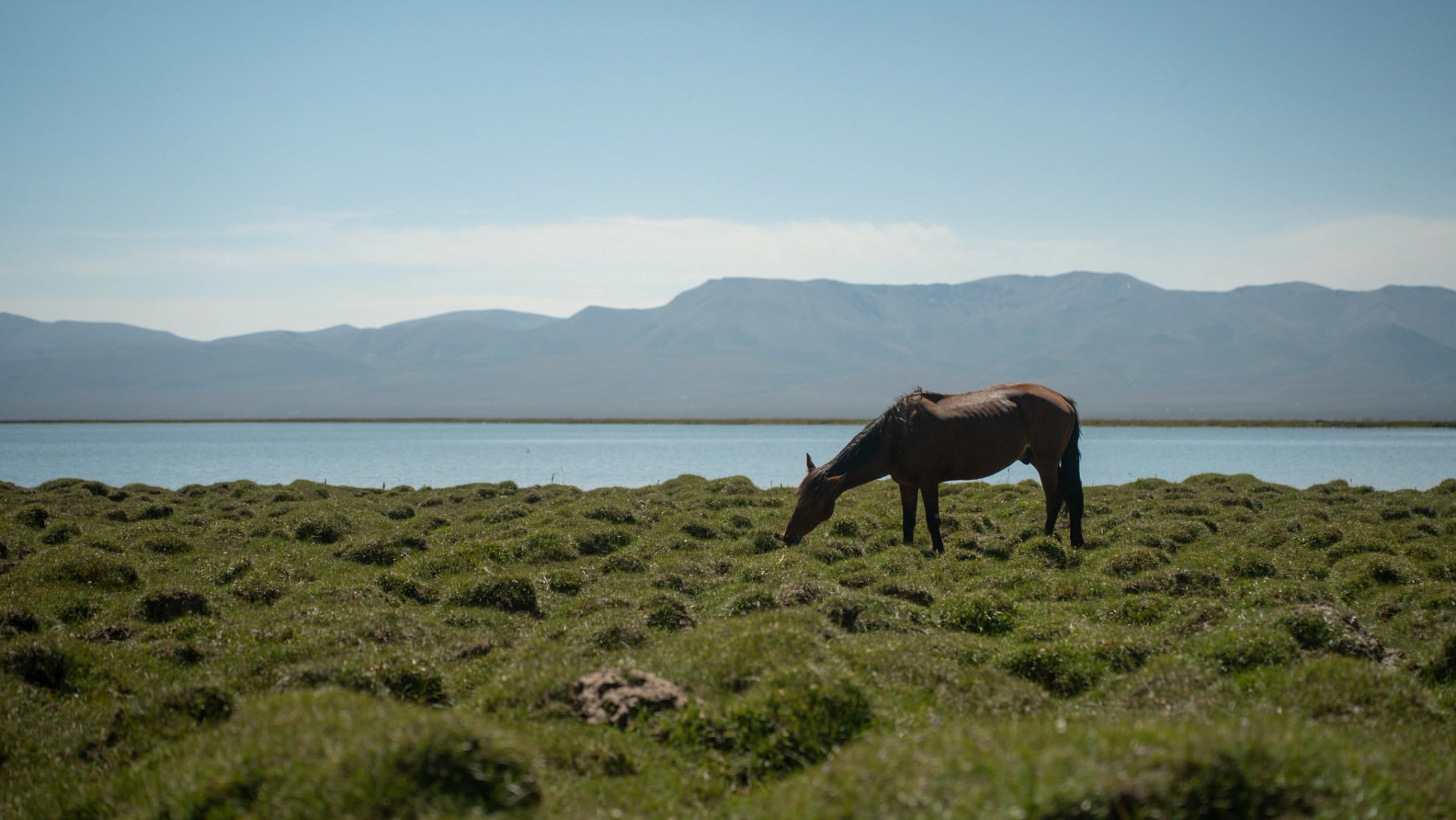

Kyrgyzstan is a mountain trip before it is a city trip. The best month is therefore not just the sunniest one; it is the month in which the high roads, seasonal camps and your tolerance for uncertainty line up.
Our full route took place in August 2025. That gives this guide a clear first-hand anchor, but not a promise about another year. Snow, rain, road work and camp opening dates can shift. Use the month profiles below to choose a planning window, then verify the stops that make or break your route.
How to read this guide: June to September is the usual planning window for a mountain-led first trip. The closer your plan depends on Song-Kul, Kel-Suu or another remote high-altitude stop, the more important recent local confirmation becomes.
Choose the month by your real priority
| Your priority | Start by considering | Main trade-off |
|---|---|---|
| The widest margin for mountain access | July or August | More demand for specific stays and drivers |
| Greener landscapes and a quieter feel | June | Higher routes and camps may still be in transition |
| Quieter roads and sharper late-season light | September | Colder nights and less predictable seasonal availability |
| A winter landscape | A dedicated winter route | This is not the same trip as the classic summer circuit |
There is no single perfect month for everyone. A short trip with two non-negotiable mountain stops needs more certainty than a longer route that can change direction. Decide which places are essential before comparing weather charts.
Peak Season
Jul–Aug
- Mountain passes and high routes are usually most accessible, subject to weather
- Largest selection of open yurt camps; confirm individual camps
- Generally more stable riding conditions; weather can still change
- Daylight until 21:00, more time for activities
- Popular spots busier (Song-Kul, Altyn Arashan)
- 10–20% higher prices than shoulder season
The complete experience: mountains, lakes, yurts and horses
Peak Season
Jul–Aug
- Mountain passes and high routes are usually most accessible, subject to weather
- Largest selection of open yurt camps; confirm individual camps
- Generally more stable riding conditions; weather can still change
- Daylight until 21:00, more time for activities
- Popular spots busier (Song-Kul, Altyn Arashan)
- 10–20% higher prices than shoulder season
The complete experience: mountains, lakes, yurts and horses
June: greener, quieter, less certain
June sits at the edge of the main mountain season. It can be green and calm, while higher passes may still carry snow and some yurt camps open gradually. If Song-Kul or Kel-Suu is essential, keep the schedule loose and ask a current local contact before fixing the date.
June suits a traveller who values atmosphere and flexibility more than completing a precise checklist. A spare day is useful only if the route can genuinely move; it does not help when every accommodation and transfer is locked in advance.
July: often the cleanest compromise
July is often the simplest balance between mountain access, fresh landscapes and a route that does not require daily replanning. It is a strong starting point for a first trip built around horse riding, yurt stays and long drives between remote stops.
That does not make every road automatic. Conditions at altitude remain local and recent information matters. The advantage is simply that the seasonal travel system is usually more established than at the beginning or end of the window.
August: the month we experienced
Our August 2025 route gave us long days, warm afternoons, cold nights at altitude and camps that were straightforward to arrange. Remote logistics felt active without the country feeling crowded in the way a European peak-season destination can.
The trade-off was less spontaneity around specific accommodation and drivers. If a particular camp, guesthouse or route contact matters to you, confirm it earlier than you would for a flexible city stay.


August also shaped the photography. Midday light could be hard, while mornings and evenings at Song-Kul made it worth slowing the route down. The useful lesson was not simply “travel in August”; it was to place long drives and rest around the light and altitude rather than treating every hour as equal.
September: quieter with a smaller margin
September can suit travellers who prefer quieter roads, colder air and sharper mountain light. Nights become colder, some seasonal camps begin to close and a rigid route around several high stops becomes less forgiving.
If Song-Kul or Kel-Suu is non-negotiable, confirm local availability and access before treating the date as fixed. September works better when the route has alternatives, not when every day depends on one specific road staying open.
Winter and early spring are a different journey
Bishkek and lower valleys can still form part of a winter or early-spring visit, but the classic Song-Kul, Kel-Suu, Karakol and Altyn Arashan circuit becomes a different product. Snow, shorter daylight and seasonal camp closures change the transport, equipment and support you need.
Choose that period because you want a winter journey, not because it appears cheaper on a flight calendar. A route designed for August should not be copied into February with heavier clothing added at the end.
Photography changes the daily rhythm
At altitude, the most memorable light often arrived early or late, while the middle of the day was better used for driving, lunch or rest. Build fewer photo stops with enough time rather than stacking viewpoints into every transfer.
Weather can also improve a frame while complicating the road. Keep the photography plan subordinate to safe access and current local advice. The photograph is never the reason to force a remote leg that no longer makes sense.
Before you lock the dates
Practical
- •Name the two or three places that are genuinely essential.
- •Ask whether their access, camps and transfers are operating for your dates.
- •Keep at least one part of the route movable when remote stops are involved.
- •Match the month to your tolerance for cold, uncertainty and advance booking.
- •Recheck conditions shortly before departure instead of relying on a seasonal average.
The day-by-day context lives in the Kyrgyzstan Field Notes. If Song-Kul is central to your choice, continue with the practical guide to yurt camping at Song-Kul; if Kel-Suu is the deciding stop, read the permit and access guide next.
From my photography collection
Photos from: Kel-Suu, Song-Kol


